la storia di dora
This past month, I sat down with my nonna and had her tell me her recollection of her life story. So, for today’s post, we are taking a Time Machine back to the 50s and 60s in Italy and the 70s and 80s in Canada. Long story short, this is the life of a woman who left her home country and childhood behind at 17 years old with nobody but her husband. But there’s so much more to it. As you will come to know.
To most, this is probably just the story of an immigrant woman. But this is the story of the strongest woman I know, who has helped raise me and taught me so many things that I value in life. A woman who would do anything for the people she loves, who has a heart and soul of pure gold that not many could ever come remotely close to having. Even asking her to tell me her story warmed up my heart because of her infectious smile at just being asked. A mental picture I will eternally hold onto.
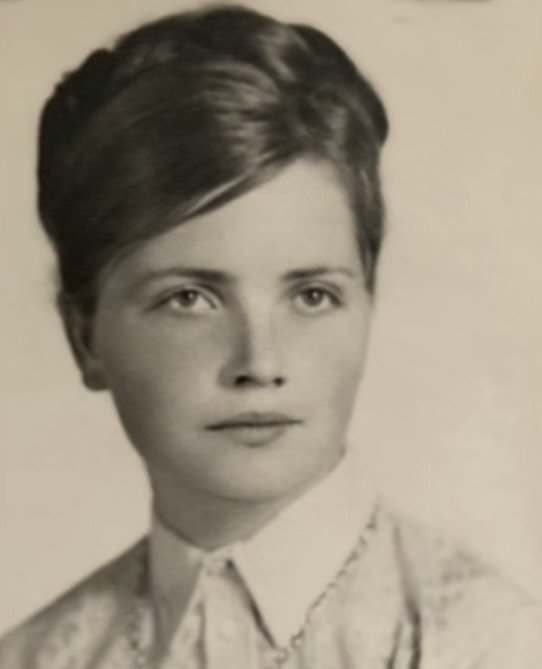
Dora was born in September of 1952 (today hehe), in a small mountain town called Farindola, in the region of Abruzzo. She has 2 older sisters, Giovina and Antonietta, an older brother, Cesare, and a younger brother, Italo. She grew up on a farm in the countryside, mainly tending to the animals and the household in her early years, while attending school during the day. Days were extremely long, spent tending to the families lands as early as dawn, the rest of the day at school, while nights she would help out around the house before she played with her friends and ‘danced where they worked’. They would play cards, Scopa no doubt, while having conversations amongst family. Attending school into the teenage years was unheard of in the Italian countryside, so she had to leave after grade 5 to help her family with the farm, although she enjoyed learning very much. She has told me all my life how lucky I am to be able to go to school and she was very right.
Dora could not recall her earlier years as much, as she did not have much to do besides the same routine daily. Life was nothing crazy in rural Italy during the 60s, most of the things they did for their way of life sounded almost medieval. Walking to a far well for water, cooking in a fire burning oven, washing clothes outside, and the only source of light was from fire. There was no televisions, no cameras, no telephones, despite how common it was on the other side of the world. She would have to wash the dirty laundry on the grass outside, with ash and soap, recalling that she would often find snakes hiding underneath the laundry. The simple things would be the highlight of their day, things like making food, bread, anything. They did what they could with what they had and they were happy that way.
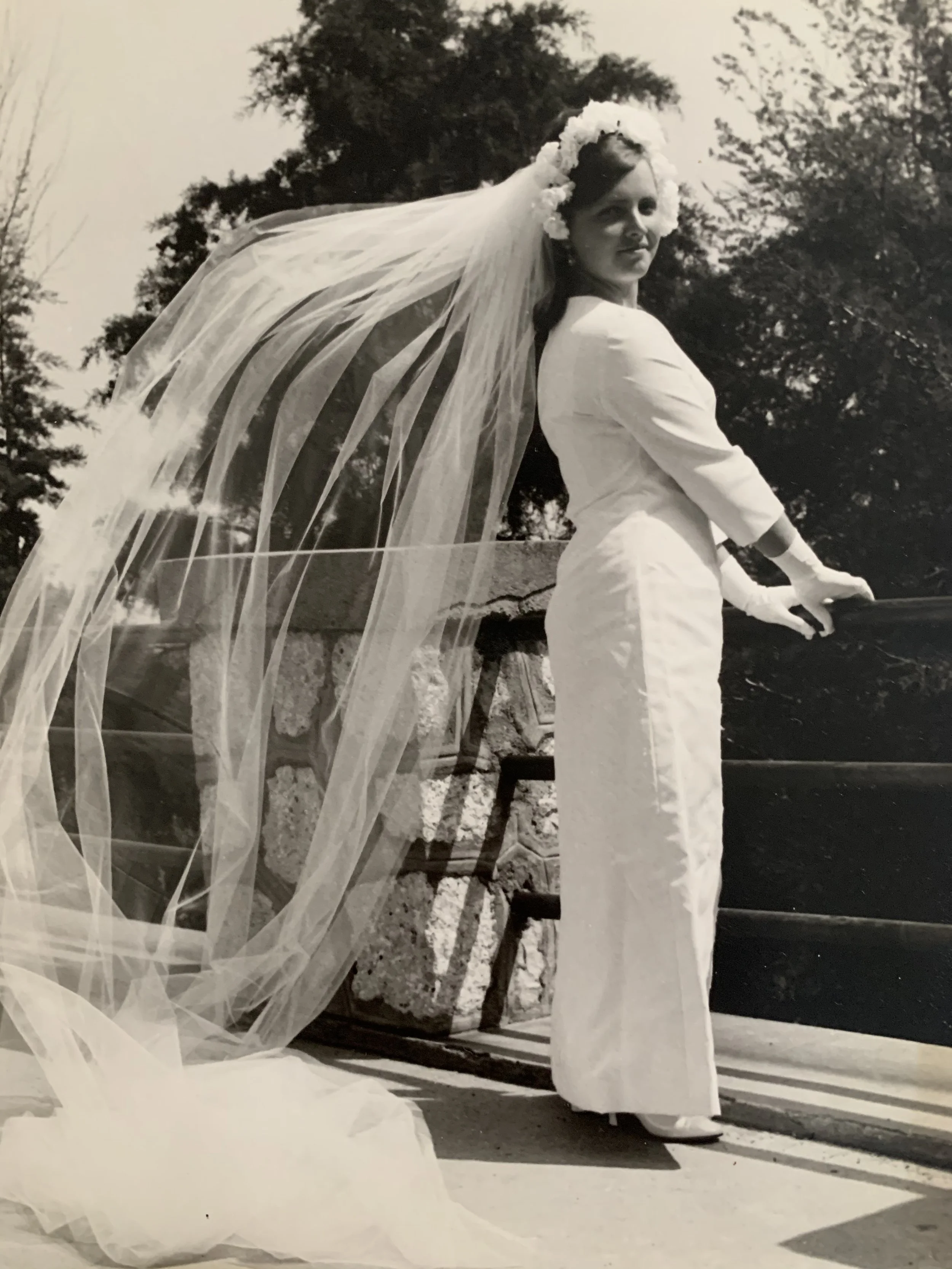
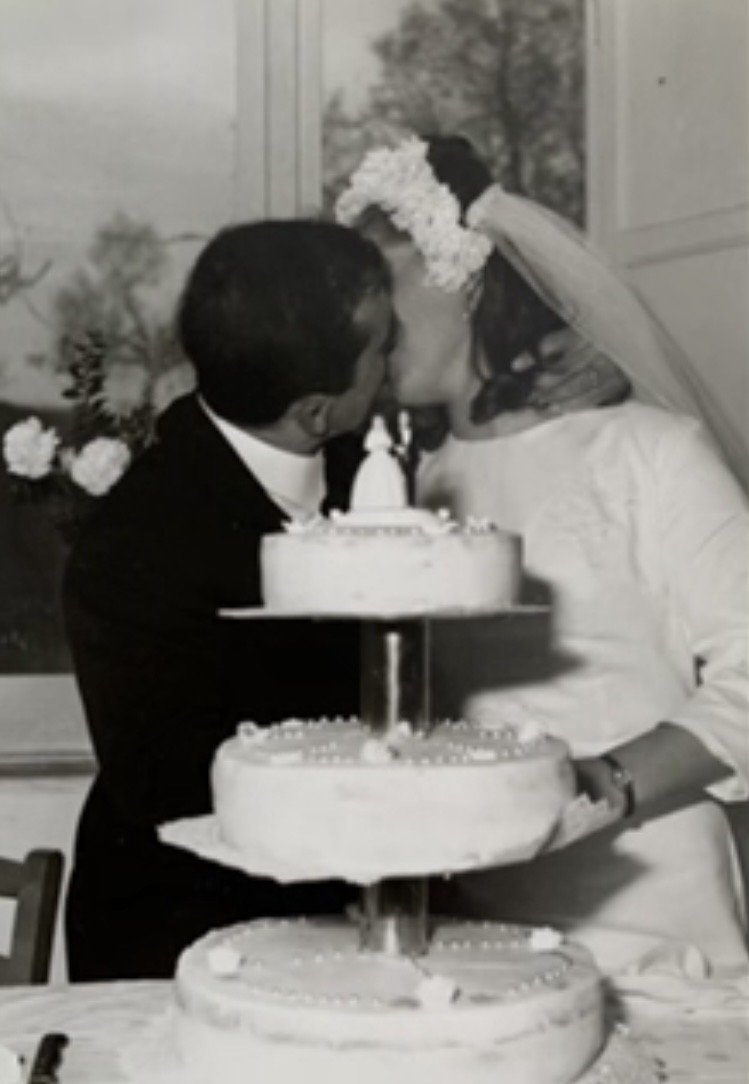
Dora on her Wedding Day, April 19th, 1970
She has been a hard worker for her entire life, which was evident in all the stories she would tell me. Of how she would run the household despite being the second youngest of the siblings, she would cook, sweep, do the laundry, clean around the house. Winters were cold for the household, which had her remembering a story of how her sister would sit by the fire and embroider all day, while she would do all the housework. This would make her mad, so, one day, when she just about had enough, she grabbed her sister by the hair and pushed her on the floor. They got in a fight of course, and despite her insistence that she was a crybaby in her younger years, her father applauded her for the action. Siblings fighting is clearly a tale as old as time!
Before entering the workforce, she would babysit for her teacher, watching her children for her while she worked. She recalled her teacher asking her to come with her to Pescara (basically the big city in that area) and she did not go, saying she did not want to be seen as servant and made fun of. However, she regrets not going, claiming that it would have been a good learning opportunity for her, but all things happen for a reason. She began working at 14-years-old, moving from various farms to tend to throughout Italy, along with her siblings. She worked in many maintenance positions, stating that she did what needed to be done. From Ortona, to Verona, to Ascoli, to Puglia, she moved around the regions completing work, from work in fields to vineyards.
Even when she is tired and running on no sleep, she will do as much around the house as she can, going until her body physically forces her to stop. Her work ethic is something I admire so deeply. She loves to bake various desserts and different kinds of Italian cookies and Abruzzesse desserts, such as pizelle, ‘lu sponge cake’, and my favourite, caggionetti. She loves to cook, especially when her family comes over, usually overdoing it and providing us with three days worth of leftovers. She also loves to pressure the shit out of us into eating more than we can carry: “C’mon you know you want it.” When I asked her what her favourite dish was, she said everything, so I will answer for her and say her gnocchi and arrosticini are my favourite dishes. She does enjoy to make homemade pasta as well, a big smile always on her face as she does so, especially when she makes homemade gnocchi. Aside from cooking, she enjoys sewing, usually working on a new project every time I see her. Although everyone is always asking her to alter something, which she does with a smile on her face, she will confide in me that it's usually a lot of work for her. Explains why most of my pants are jaggedly cut and not hemmed.
When Dora was 17, she met a man named Domenico at a cafe bar in Penne, his hometown as she came to find out. She knew his mother, so she went up to say hi, his mother introduced them, and the rest is history. They met in March of 1970, around Easter time, which according to Google was March 29th, and not even a month later, they were married on the 19th of April. She moved to Canada on May 15th. This is obviously a big transition of life, going from being an unmarried teenage girl in early March to married and living in a different country by mid-May. She did not have a clue what was going to unfold for her, which is crazy for me to take in, I could not even begin to wonder how she felt and how drastically her life had changed within 2 short months. I really wish I could go into her brain and watch it all unfold. Maybe it’s just a sign of the times, but I believe many of us today would have a difficult time dealing with all those changes. At least I know I would, which is enough for me to see just how strong of a woman Dora is.
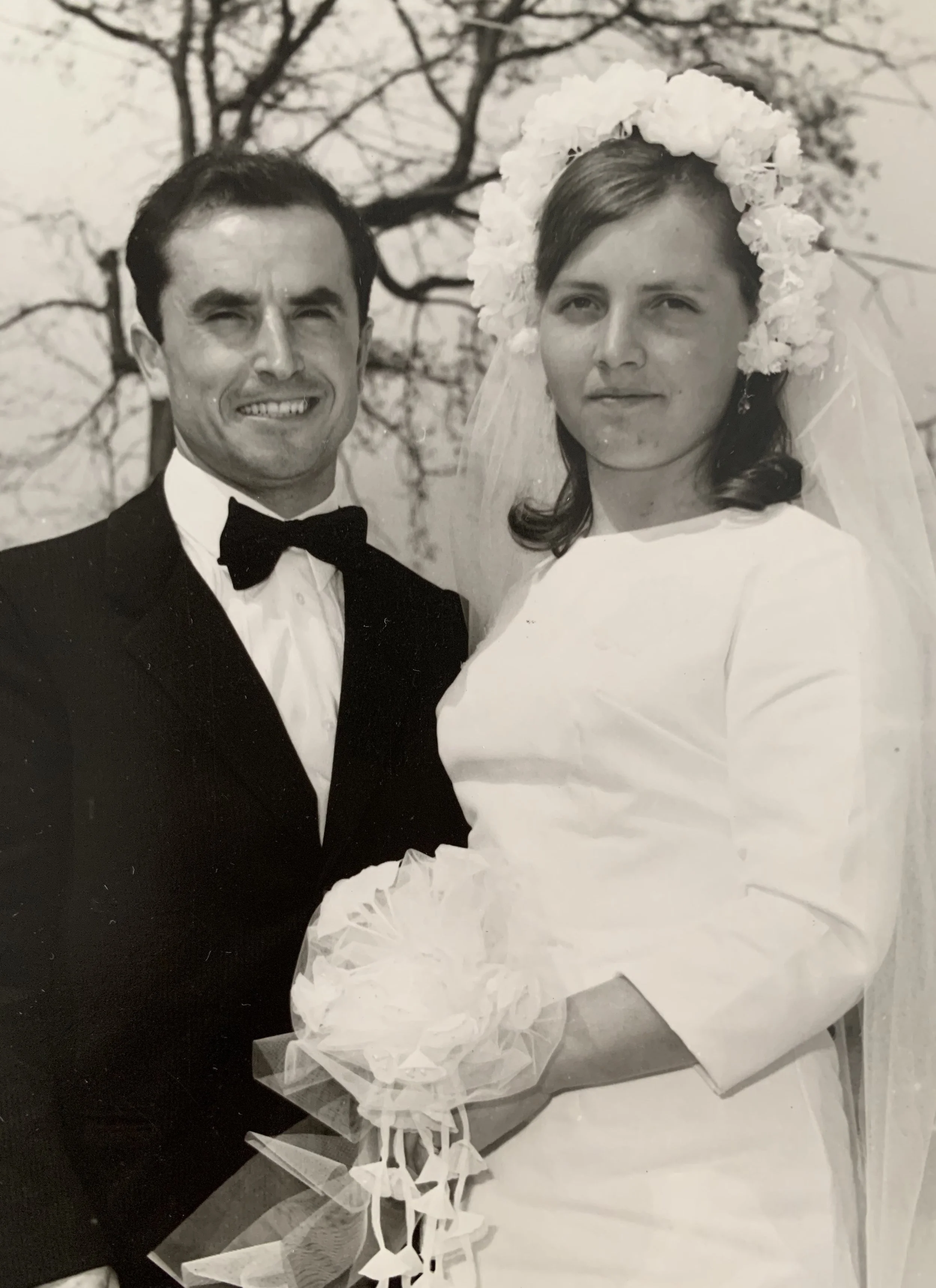
My nonno & nonna, April 19th, 1970
Moving to another country is hard in general, what makes it 10x harder, stated by Dora herself, is moving to a country where you do not know anyone, do not know the language, and not having any family to come along with you. Not a sibling, parent, or even a cousin. While it was different times, even moving to a country at her age with a man who, of course she has come to love, but barely knew at the time is definitely frightening. But she did it. As hard as it was for her to wrap her mind around it all, she pushed through, saying that she was thankful for the decision. Being able to learn new things, living a new life and doing what she had to do to learn, is what gave her her resilience. “I did the best I could do. If you don’t learn, you don’t know nothing. You cannot be bothered by every little thing. If one thing doesn’t go right, you have to keep pushing and hoping.”
By February of the following year, she had a new addition to her little family. Her firstborn daughter, Giuseppina. Throughout the pregnancy, she was dealing with a lot of morning sickness and pain, yet she had my nonno’s sister, Verina, to help her along the way, who she stated she was very thankful to have. She wrote for her family back home in Italy every week, letting them know of all that was going on in her new life and her pregnancy. Yet, it was still a tough experience for her since she was alone at home during the day while my nonno worked, but her sister-in-law helped as much as she could. “She was good for me, I was good for her.” It was hard to adjust to the new way of life before having a baby, but especially after the fact considering how big of a transition it was in general. But, as stated before, she expressed how thankful she was for not only the help she received from Verina, but for their relationship, since the two always helped each other, physically and mentally. Two years later, she had another daughter, my mother, Vilma. She remained at home to take care of her girls for the next couple years.
Coming to a new country as an immigrant unfortunately puts you at the bottom when it comes to jobs, trying hard to find work and only finding positions of low income. She started off by working in a kitchen at a restaurant, cooking, making dishes, and working where she was needed in the back. Her next job was at a mushroom factory, as I understood? I believe she just cleaned and packaged mushrooms, we did not dive in too deep with that job, although I wish I did as it was super random to hear lol. Her next line of work was in the cleaning business, where she worked as a maid, cleaning many homes for families around the Creek. The job that found her a bag filled with either 500 or 5000 dollars in the home of a family that just moved out (I forget the big details, I am totally blanking with this story now) but her being the kind soul she is, she returned it to its owner, which is where we contrast (I’m kidding). She worked in a candy factory for a couple years before her transition to the caretaking workforce, where she worked in taking care of sick individuals, which led to her retirement.
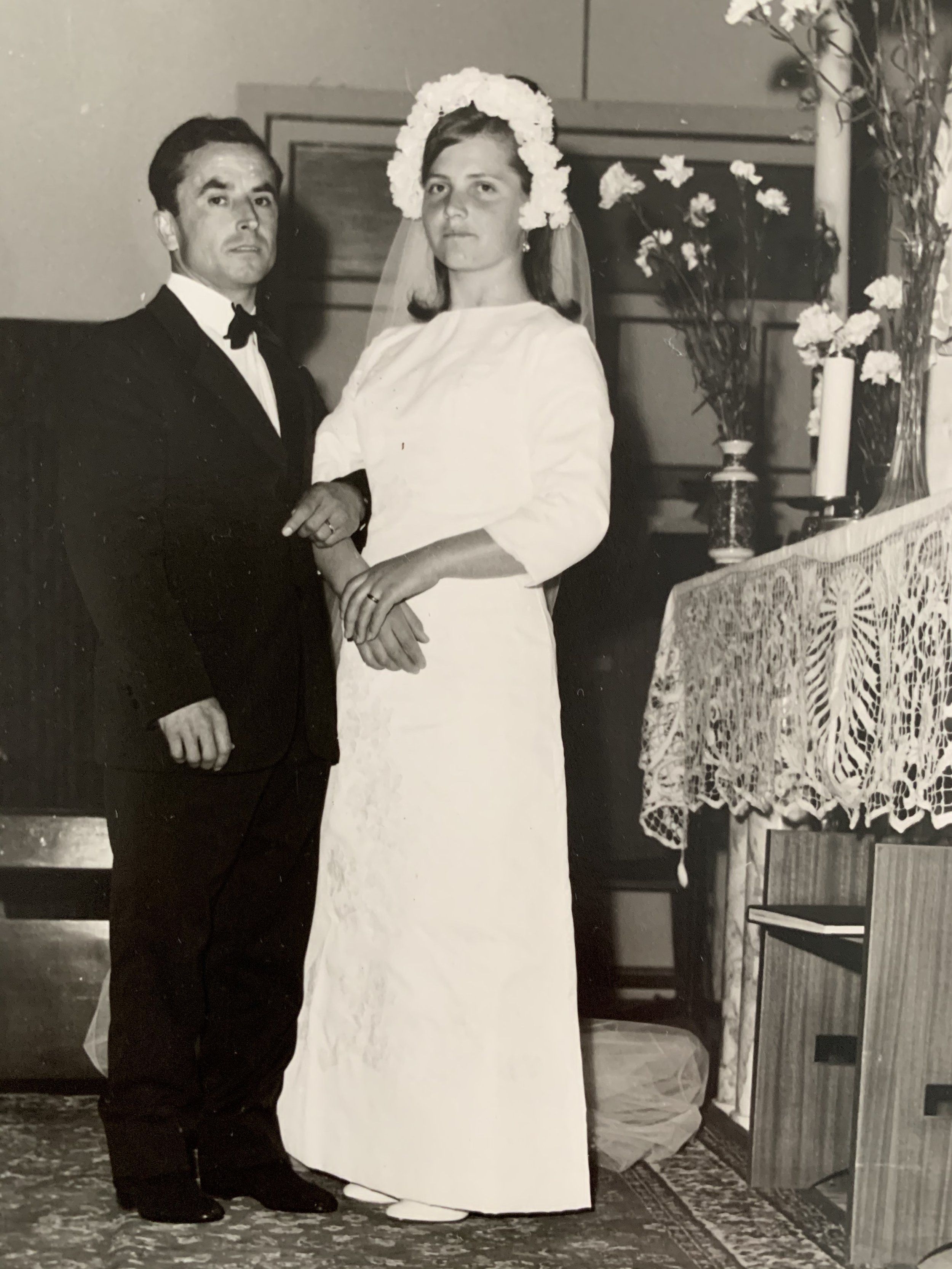
Dora & Domenico, 1970
Unfortunately, racism was another part of the immigrant experience that has often been pushed aside or forgotten. We hear so much about the “American Dream” and the idea of coming to North America for a better life, but the reality was not always so welcoming. Italian immigrants, among many, many other immigrant communities, faced a large amount of prejudice, discrimination, and even violence when they arrived. I think this is important to acknowledge because racism toward immigrant communities did not simply disappear. Coming from an Italian family, and having a friend group that is also mostly Italian, I have heard many of the same stereotypes that were directed toward our ancestors: comments about their skin colour, their appearance, their accents, their food, their smell, or the idea that their culture was somehow strange or inferior. What is even more unfortunate is that versions of these same stereotypes continue to appear whenever new immigrant communities arrive.
Dora did have her own experiences with racism, especially in the workplace, where she recalled that her coworkers would often make comments about the food she ate and its scents. She has a fair complexion and lighter hair and eyes for an Italian woman, which did not initially draw the attention of others, but once they found out she was Italian, she would get called derogatory terms. In a workplace as a new immigrant who barely spoke the language, she was subject to feeling a bit vulnerable. She stated that she felt like they thought they were better than her, that they thought her to be inferior, yet she said she did not care. She would just say “ma vaffanculo” (translation: fuck off) everytime they made a comment and they understood that and left her alone. Must be where I get it from.
She told me many times how her story was ‘not much,’ and how it was nothing crazy, that it was just how life was. But to me it means the world since I value her so much. And while it is nothing revolutionary and groundbreaking, that is what makes it so meaningful. It is a life that was so normal for so many 50 years ago, but is unheard of nowadays and I believe this can teach us some form of gratitude as well. That we are lucky, as humans, to have so many opportunities because of the sacrifices of our ancestors but also, as women, that we are able to have a lot more autonomy than past generations of women.
And it wasn’t just that her life was different from mine. She experienced two different worlds, even within her own lifetime. How she was living in the rolling hills of Italy versus how life was in the advanced North America, how strange it must have felt for her to leave everything behind and transition to this new way of life. Yet, despite having very little, she was a happy person and even now she still holds onto that same joy, always happy with what she has. Her family. Her home. Her religion. The simple day to day activities. Cooking. Baking. Rai Italia’s game shows. You can really feel it when you are in her presence - a feeling that is inexplainable, but so easy to notice.
When I think about my nonna's life, I don't just think about an Italian grandmother who makes cookies and alters everyone's clothes. I think about a fourteen-year-old girl working across Italy, a young woman leaving her home country, and a seventeen-year-old who had no idea just how drastically her life was about to change. And somehow, that girl became my nonna.
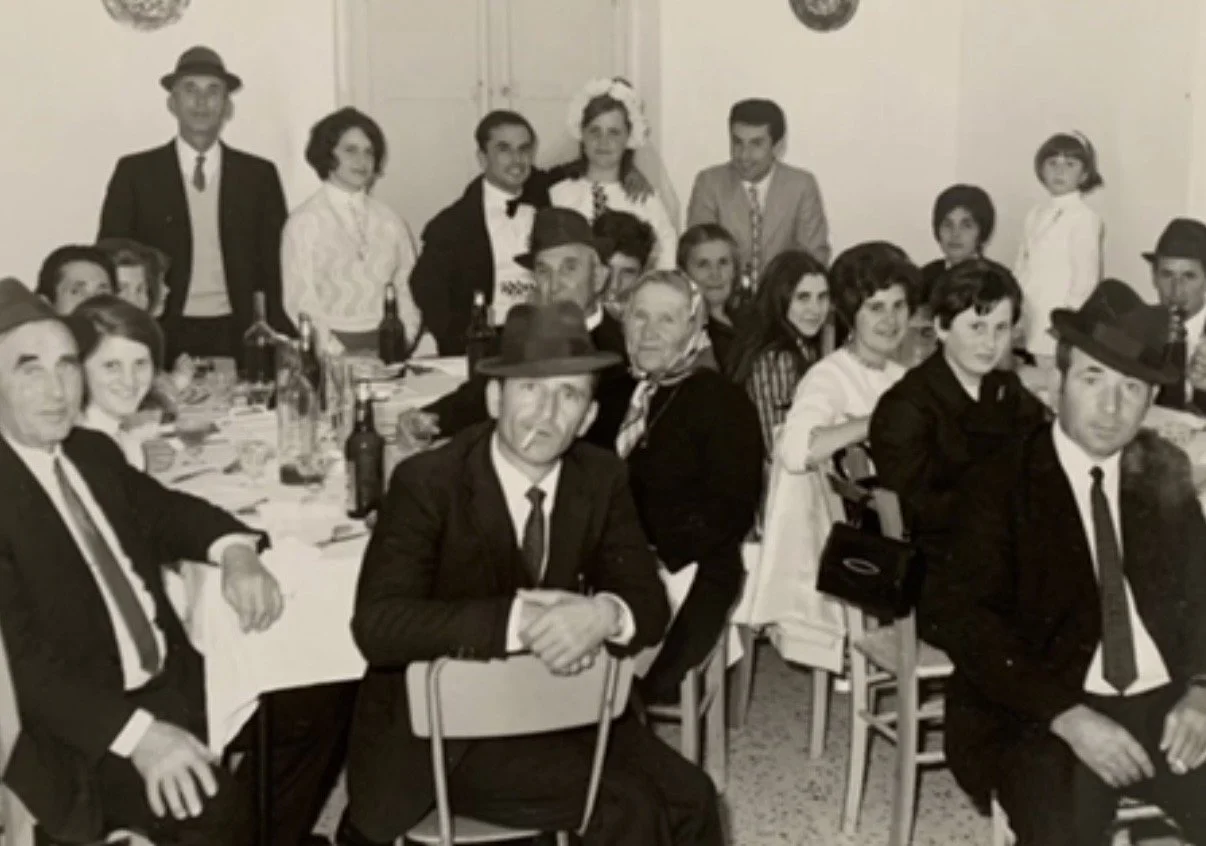
Have you seen anything so Italian?
