season of the witch
Welcome to Blogoween! My version of vlogmas but make it fall and on a blog. Since it is my favourite time of year, I want to make it more special and since October technically spans 5 weeks, I want to try and release a post a week, IF my schoolwork does not swallow me first. October looks to be a very busy month, so I hope I can find the time to do so. Anywho, to kick off Blogoween, our first topic is witches, ooouuhh.
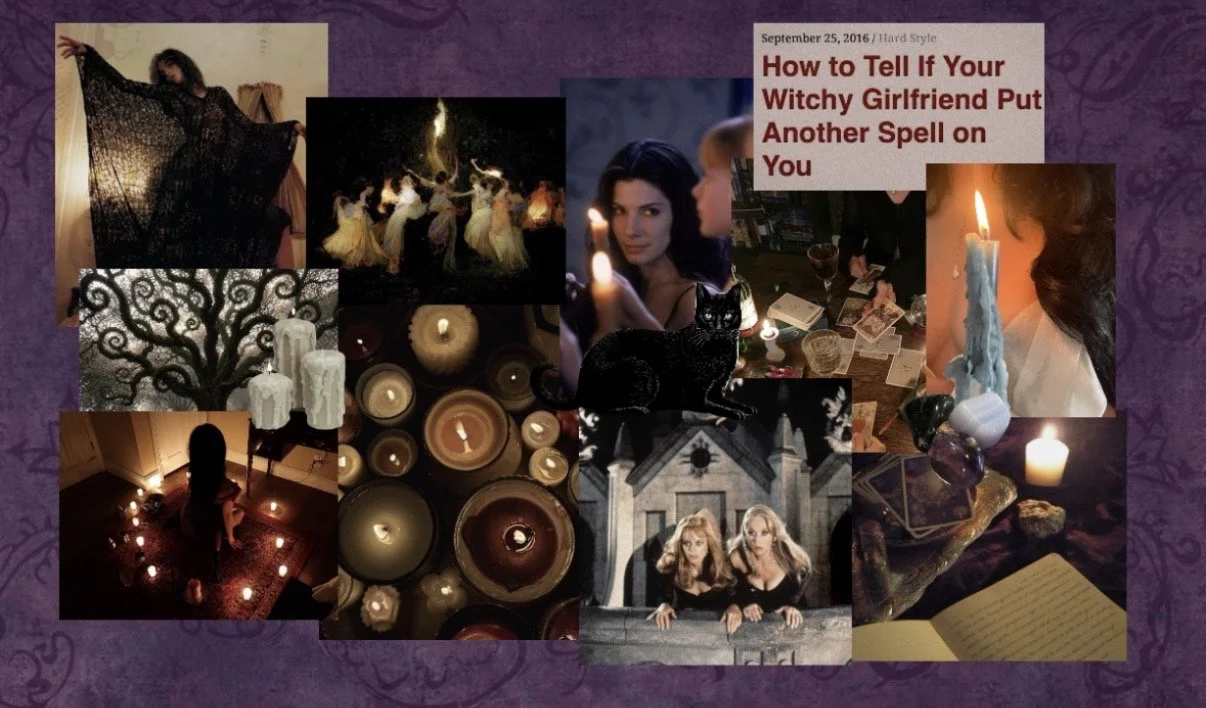
Witches are very real and witchcraft is a practice that has been occurring for quite the while now, so the question of whether they are real or not is not really relevant for this purpose (although it is apart of my real or not series). And while they aren’t green, warty, and fly on brooms, they still do get a bad reputation. Although, as you will soon learn, they are not inherently bad as most make them out to be.
Now, before I begin, I know that this is an unfortunately controversial topic in a sense, since the word witch is often used in fear and causes chills to run down the backs of our spines. After all, that is what most have been led to believe. I simply have found interest and a fascination in the topic and history of this field, while also coming to realize that it is NOT an evil practice as most believe it to be. I ask that if you do wish to continue forward on this blog, please keep an open mind and remember that not everything that is unfamiliar is inherently evil. I promise that no spells will be done on you or you won’t get the mallochio for reading this. (At least not from me)!
The history of witchcraft is apart of the vast history of our world and understanding this history means examining not only what people believed, but also how fear, power, and prejudice shaped the way certain practices and communities were treated. While there is a dark side to witchcraft, there is truthfully, a dark side to every practice or religion as we have come to know in the 21st century. Just as we approach other religions and practices with respect, the same open minded and no judgement should go for all the practices that will be mentioned as well. Which has me wondering, is witchcraft demonized because of the practice itself or because it has always been a women-dominated practice? Stay tuned.
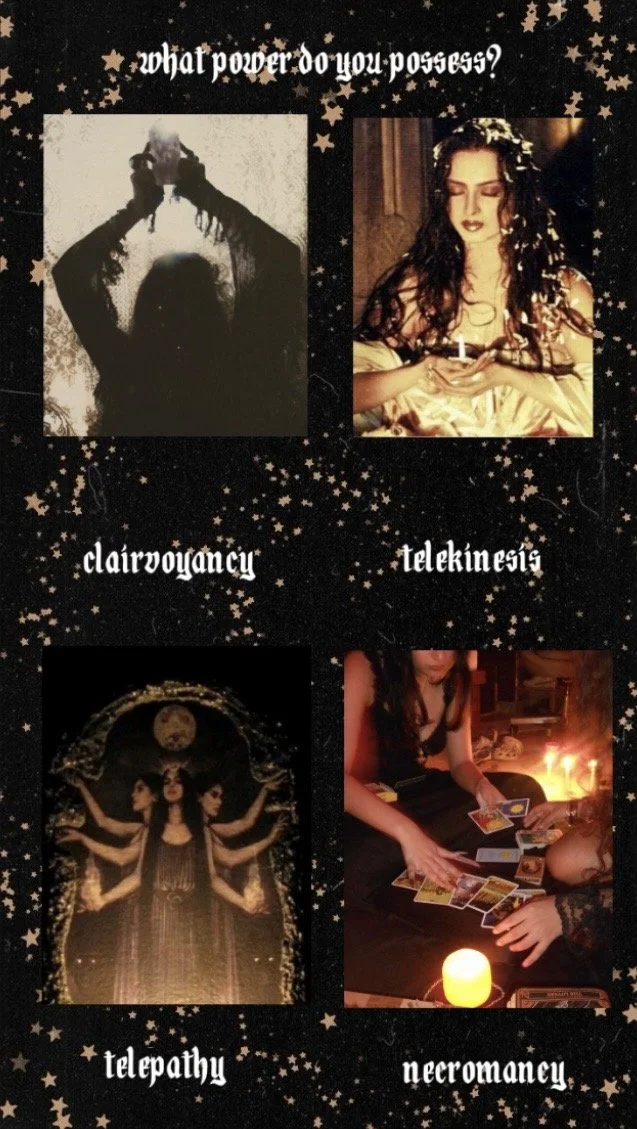
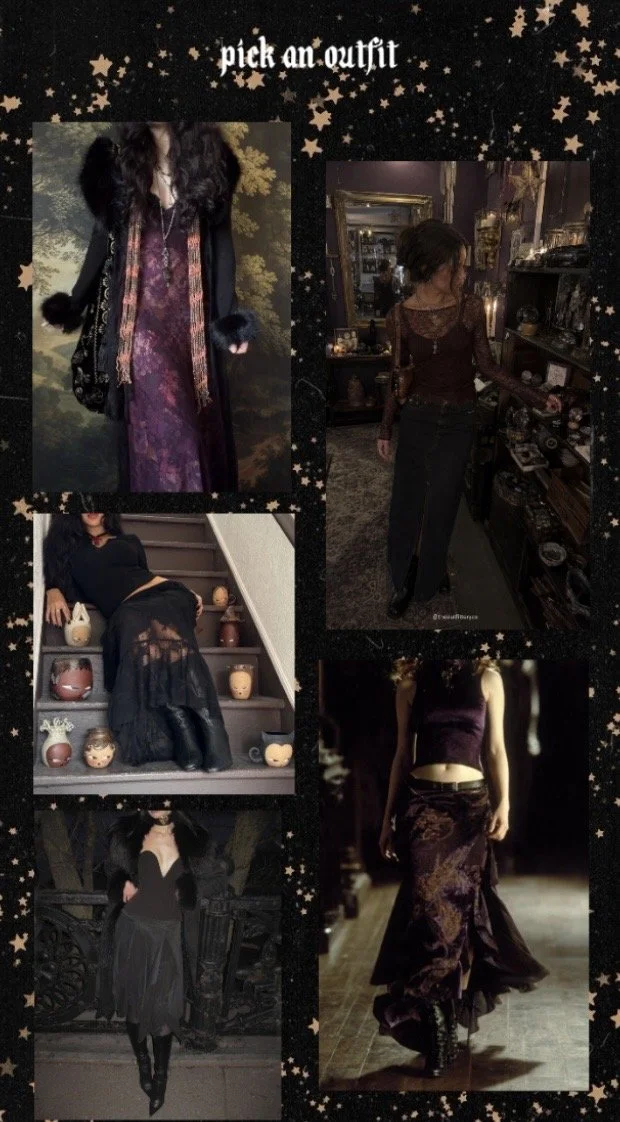
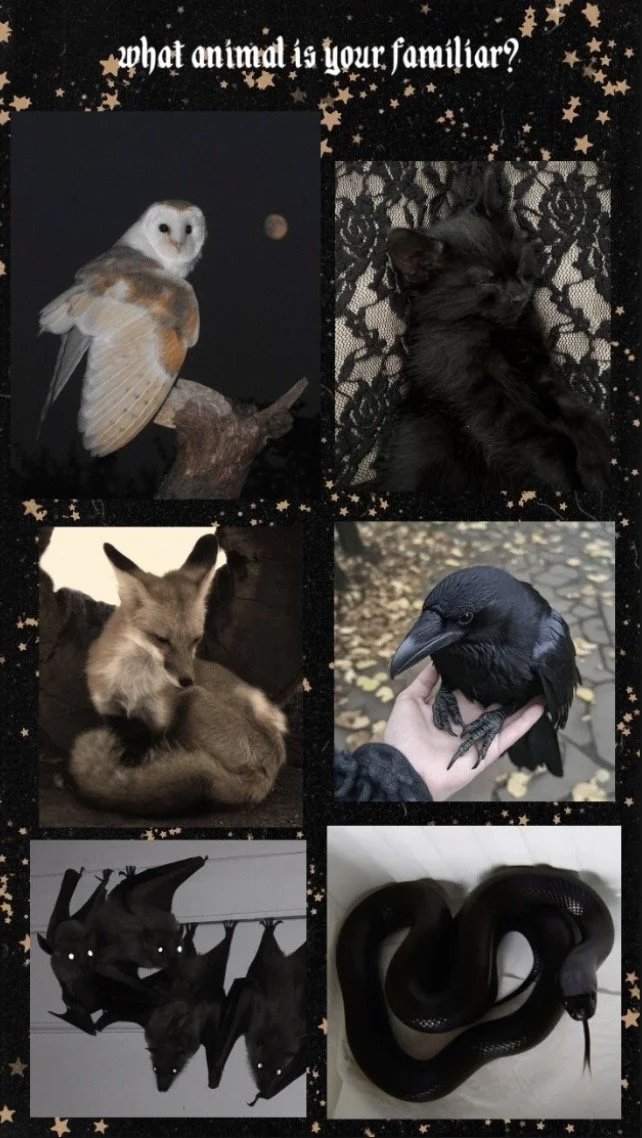
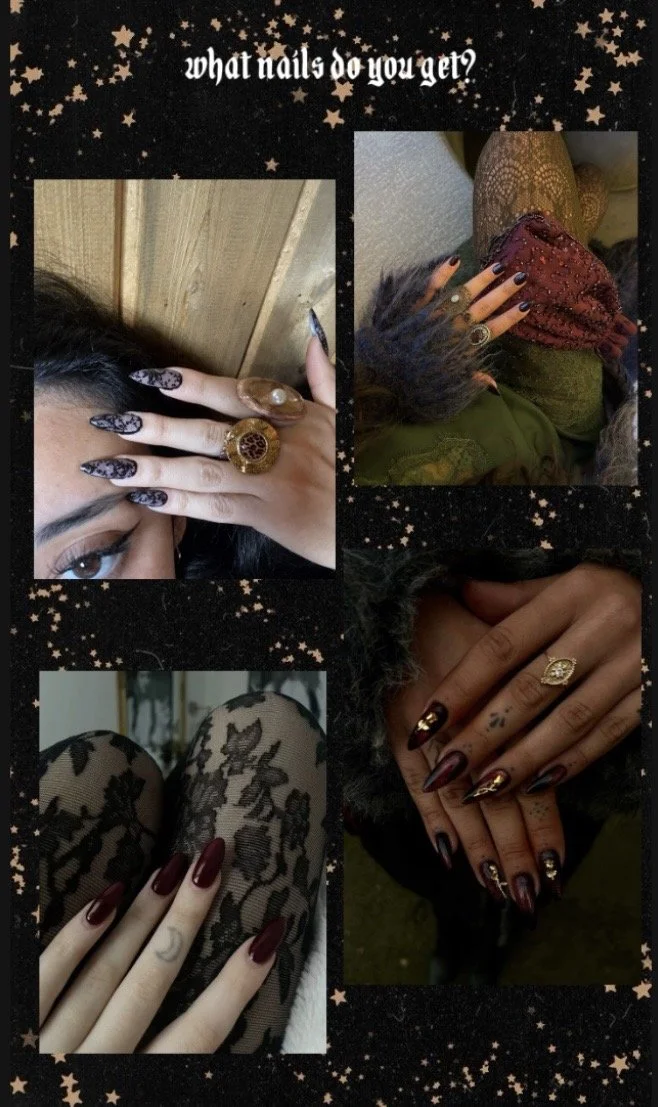
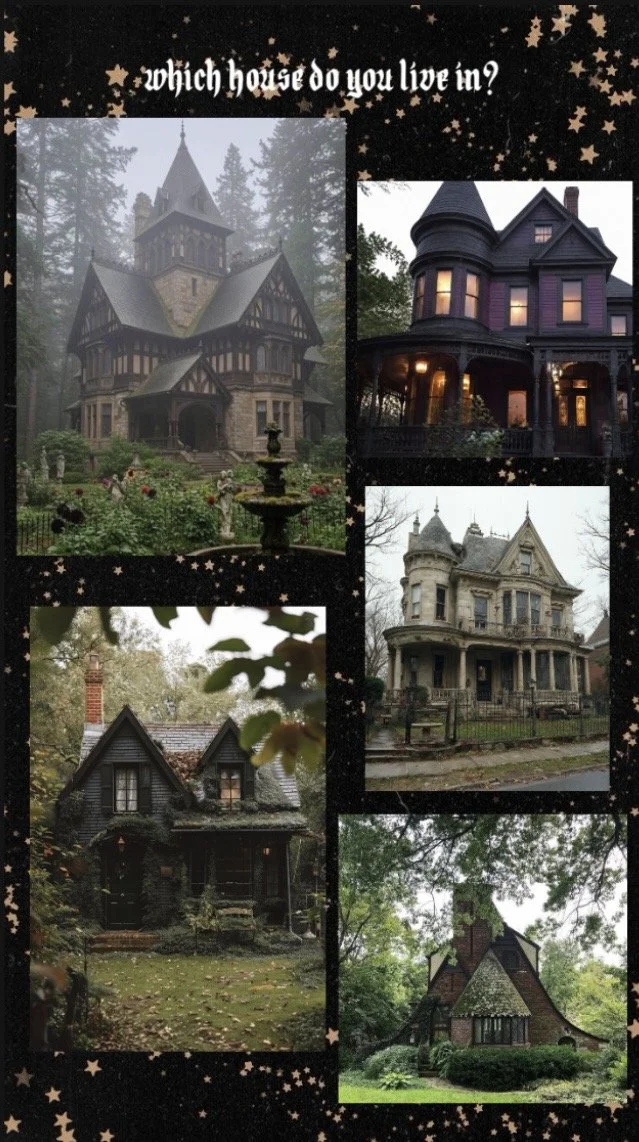
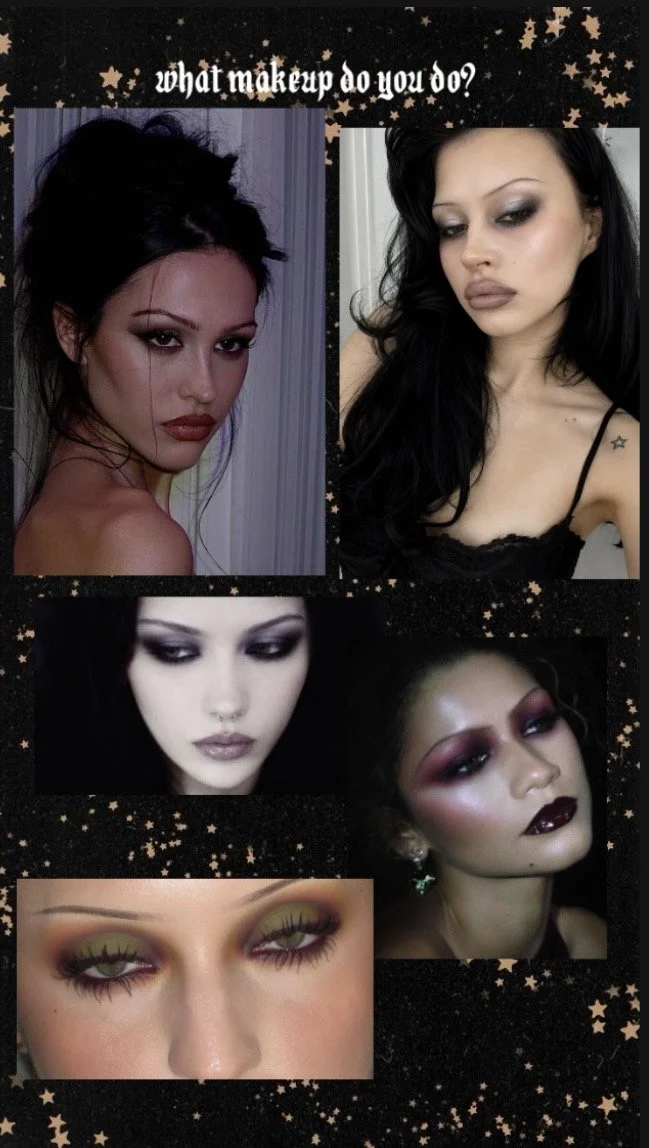
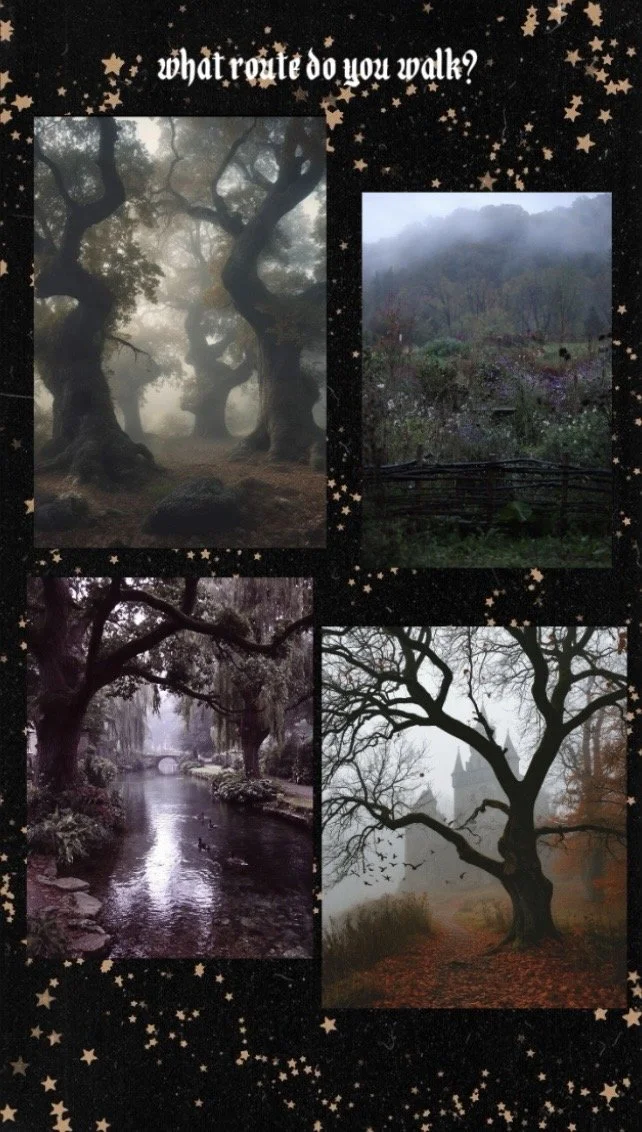
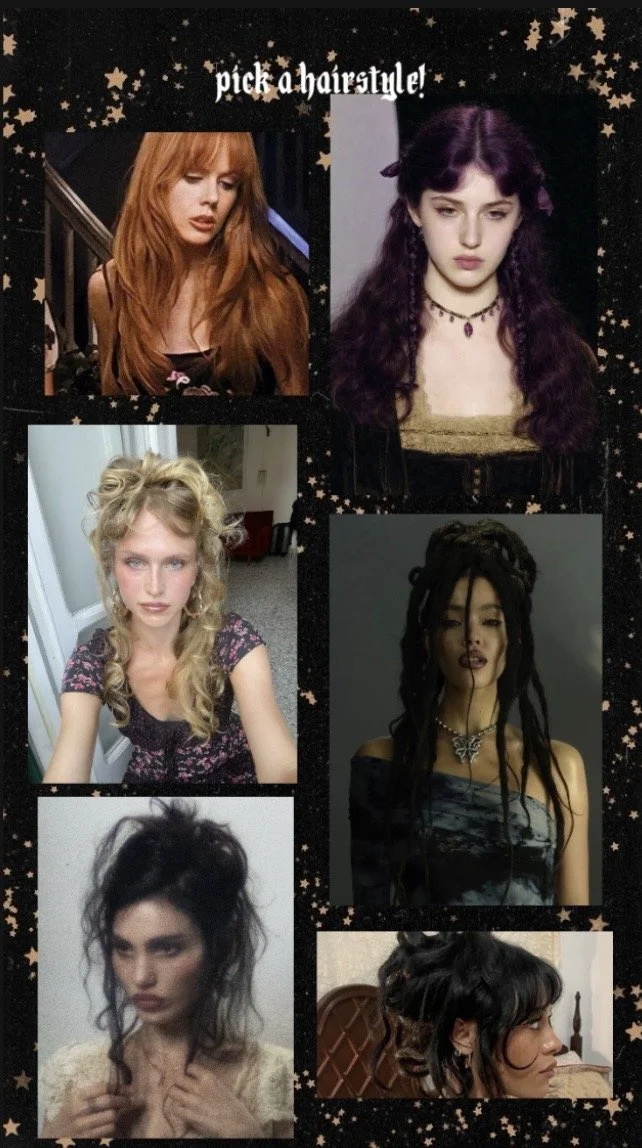
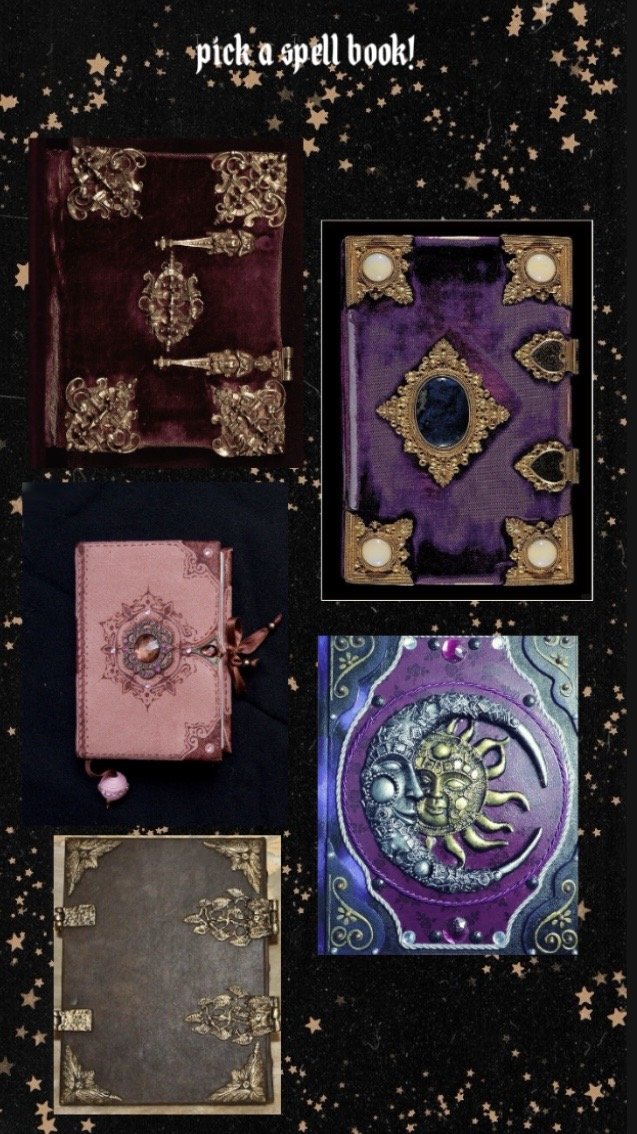
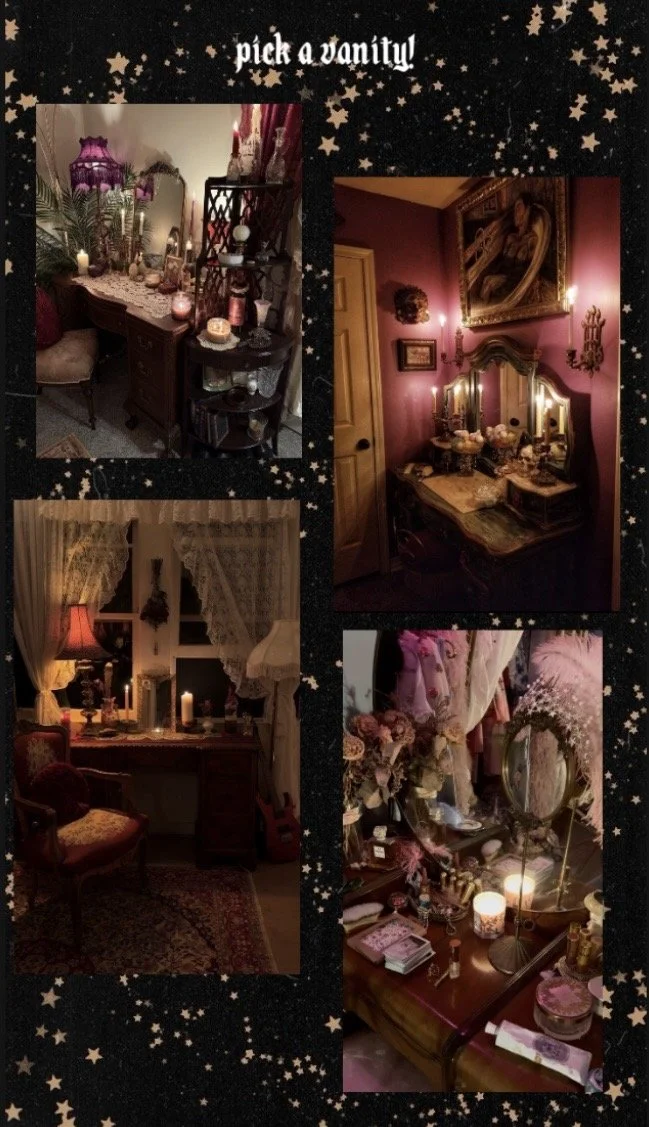
Witches are those who practice witchcraft, and possess the use of supernatural or magical powers, believed to influence events, nature or unseen forces. These powers may be to cause harm or healing, while in mythology it is often harm, in real life it is often for healing. It is a belief in the power of the human mind and spirit to interact with the world around us, a practice of using natural energies and spiritual forces to bring change, healing, and personal transformation. Across cultures, the meaning of witchcraft differs, with not only different practices and rituals, but completely different forms of the practice, which we will learn about shortly.
In Medieval Europe, a Witch was framed to be someone using supernatural power to cause harm, often linked to maleficium, which is the use of magic to harm others. For those who are unaware of the history of witchcraft in Europe and the Western world, it was a popular practice up until the 15th century, when the Witch hunts began upon the rise of the Catholic Church. These hunts occurred since the practice was viewed as Satanic and that these people were organized agents of Satan, however, most of those who were killed in the hunts, were actually innocent people with no ties to witchcraft.
As for popculture, how have witches often been portrayed? Not as what they are in reality, I can tell you that. Many shows have depicted witchcraft to be used in an evil manner, like American Horror Story’s Coven, the Chilling Adventures of Sabrina, even Hocus Pocus. There are movies like Harry Potter, which use the term witch simply to describe a woman who possesses magical abilities. It appears to have different ranges as well. In American Horror Story, the witches of the coven were all evil and possessed supernatural abilities, such as clairvoyance, telepathy, telekinesis, and resurrection. In the Chilling Adventures of Sabrina, it was through spells and chants that the witches and warlocks used their power. In Hocus Pocus, the Sanderson sisters used spells, rituals, and potions as a means of their magic. Whereas in Harry Potter, the witches are women across all ages, who simply possess the ability of magic through the use of a wand. So, what we have here is varied ideas of witchcraft, although for the most part, it is represented in an evil manner in popculture, which has me thinking, where has our perception of witches actually come from? Popculture or history?
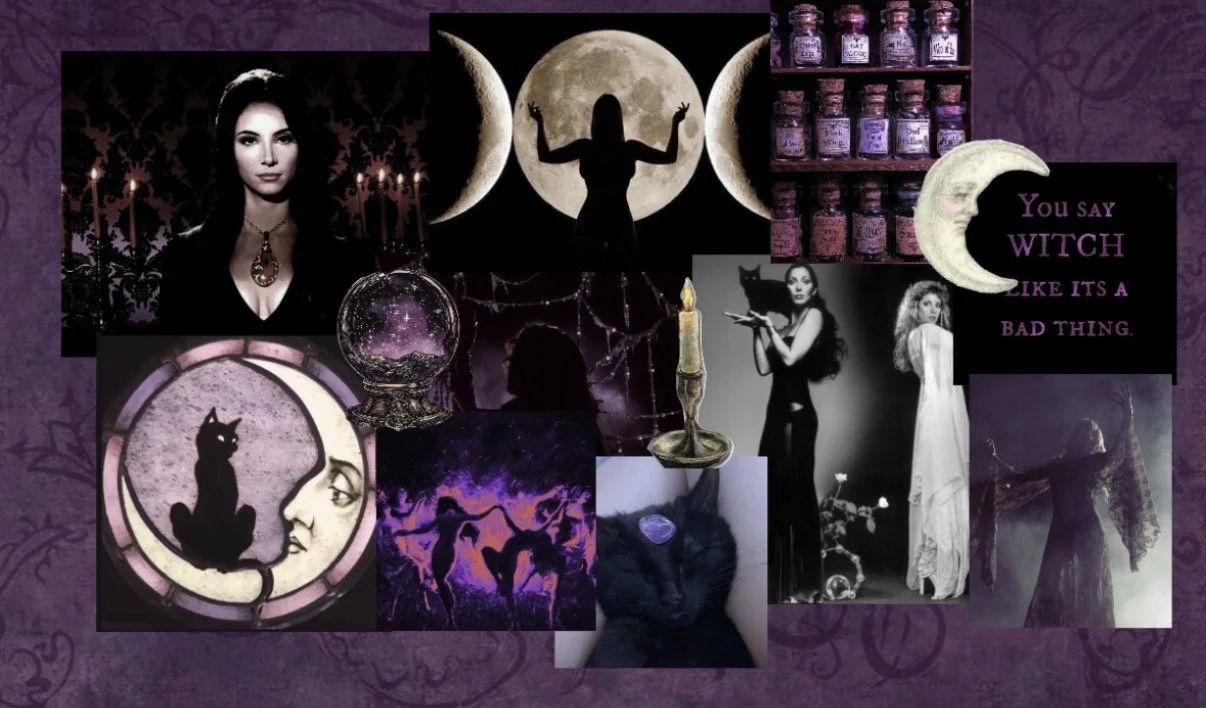
A witchcraft dictionary of words that will be used that you should know:
Coven: A group of witches and warlocks who practice together.
Warlock: A male magic user.
Familiar: A companion used to assist a witch, such as a cat or toad.
Grimoire: A book containing magical knowledge.
Hex: A magical spell or curse used to cause harm.
Maybe you need some witchy music to add to the ambience? Perhaps some witchful thinking? https://music.apple.com/ca/playlist/witchful-thinking/pl.u-leylWZ6tj356Go6
And wait! Some amazing, witchy movie recommendations? Can never go wrong!
Practical Magic
Beautiful Creatures
The Witches of Eastwick
The Craft
The Love Witch
The Witch
Hocus Pocus
Death Becomes Her
Coven (AHS)
The Chilling Adventures of Sabrina
Where exactly IS witchcraft or magic popular? Many cultures across the world have ties to it, although the most common cultures associated with it are Latin America’s brujeria, Romania’s Vrajitorie, Italy’s stregoneria, African-American’s hoodoo, Wicca and its relation to Paganism from the UK which have made its way to North America, and of course, the worldwide modern day witch. Although there is so many more across all the cultures, this is what I have found the most information on, and I also need to keep this as short as possible lol. Latin America takes on the bruja or brujo, similar to the Italian’s Strega, both heavily incorporating Catholicism icons, saints, and prayers, with a major focus on energy cleansing and the protection from the ‘evil eye,’ or mallochio/mal de ojo. Vrajitorie is a Romanian practice, translating to the word sorcerer, tied to ancient Dacian roots to work with natural elements, rituals, protection, and remedies, which is often strongly associated to the term fortune-telling. Hoodoo is folk magic developed in the Southern U.S., with a focus on magic and healing without a centralized religious structure. Wicca is a generally Western-practiced modern Pagan religion, focused on the worship of the divine, the seasonal cycles, and nature. Modern-day witchcraft is kind of a big mixture of everything, if you will.
Now, before I dive in to all the information, it is simply what I have found online, so it may be wrong, I am still educating myself on the topic! Everything I write going forward is what has been written down by others, so if you find anything to be misinformation, let me know. Same goes with the pictures, they are what came up when I searched it up, but with Pinterest and Google things get mislabeled so not everything may be the exact practice that is stated. Especially with Hoodoo, a lot of it got mixed around with Voodoo, which even I as a person with little to no knowledge on the practice found to be evident, so please just be aware that the moodboards are mainly for a general vibe of it, not definitive representations. Just some discretion before we continue!
Brujería is a Latin-American folk form of magic, which differs across the many countries of the Americas. The bruja is a female practicer, the brujo a male practicer. Prior to colonization, many women were healers and midwives, with traditions passed down through the generations. When Europeans colonized Latin America, the practice was demonized and suppressed due to beliefs not complying with that of Catholicism. Indigenous and African spiritual practices were blended with the traditions of Catholicism, which has created many of the different forms of brujería that are practiced now. Modern brujería includes herbalism, healing, charms, divination, ancestor worship, cleansing, candles, offerings, and spiritual rituals, as well as the making of an altar to connect with the spiritual realm. Many of those who practice have reclaimed brujería as a way to connect with their ancestors and preserve their culture.
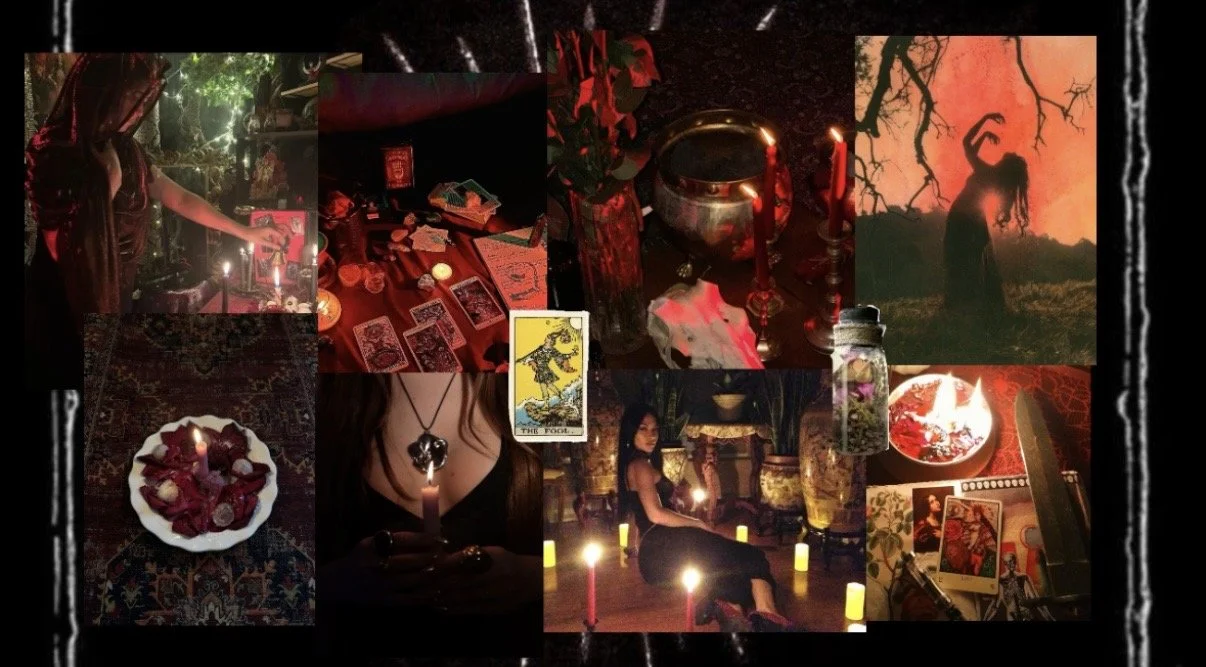
Stregoneria is an Italian-folk worship of the land and nature centered around healing, protection and good luck. It has pre-Christian roots, and was actually a widely used practice upon the rise of the Catholic Church and the European witch hunts in the 16th and 17th centuries. However, many still practiced in secret, despite the demonization of it, and it resurged in the 20th century. Practitioners used herbs, spells, prayers, and rituals, with plants like rosemary, basil, thyme, and fennel, which they believed to have protective or healing properties. Italian magic also includes beliefs such as the evil eye (malocchio), with amulets, charms, and rituals used for protection, such as the famous cornuto, usually crafted from gold, silver, or red coral (if you intend for it to do its job lol). Healers used herbs, charms, and prayers, while other forms of magic focused on love, protection, or influencing others.
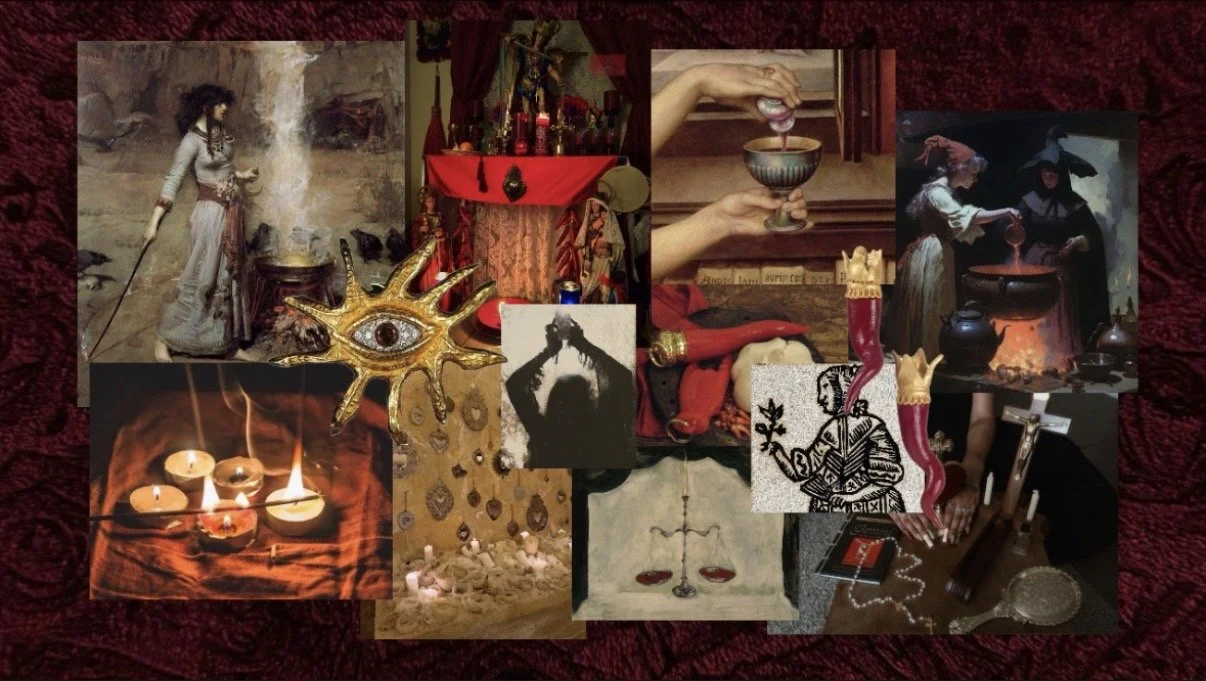
Vrajitorie is a traditional form of witchcraft with ancient Dacian roots, that is practiced in Romania. It has deep connections to nature, spirituality, and often uses the 12 zodiac signs in Astrology as a way to help practitioners tailor their spells and rituals to align with the the energies of the cosmos, as well as the belief that humans, nature, spirits and ancestors are interconnected. There is a strong notion that the Carpathian Mountains hold magic and are infused with spiritual energy, therefore making the use of natural elements an important factor to the practice. Rituals, spells, blessings, and healing practices involve the use of talismans, herbs, and stones, believed to enhance the effectiveness. Common practices include protection and healing rituals with the use of herbs, roots, amulets, salt and incantations, as well as the infamous love spells, used to attract or rekindle love. Ancestors are seen as protectors and guides over the vrajitoare and natures spirits are also acknowledged in rituals and offerings, with symbolic tools such as wands, cauldrons, candles, chalices, and pentacles.
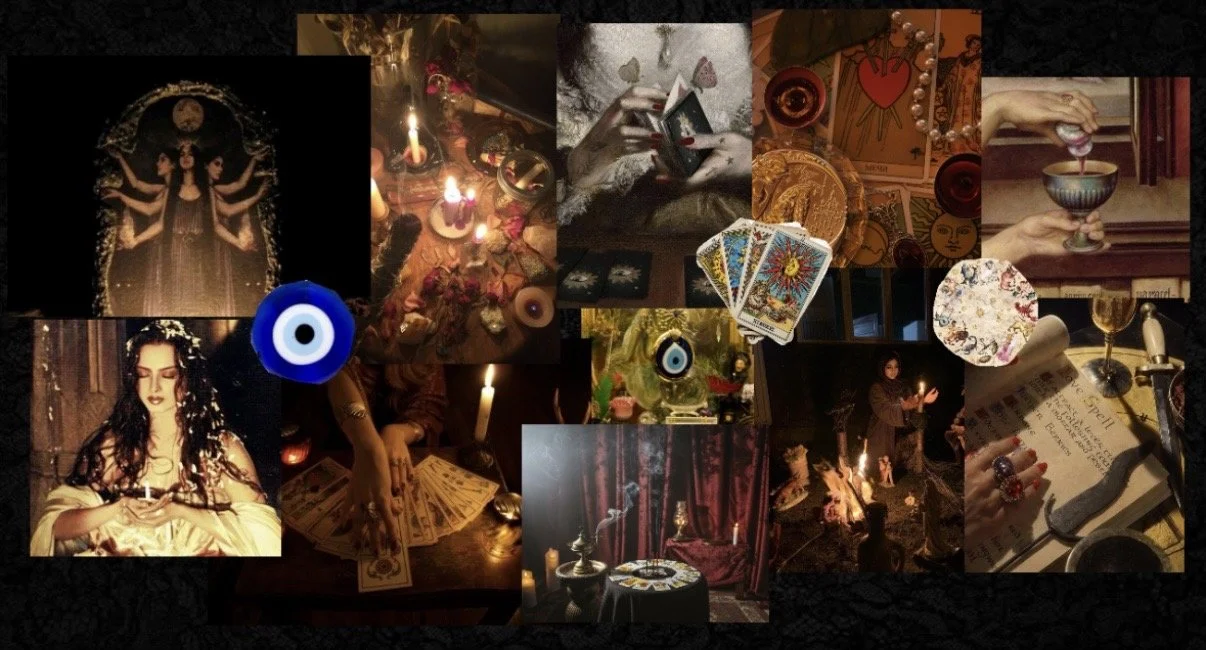
Hoodoo, which is also known as Conjure or Rootwork, is an African American tradition of folk magic (not witchcraft, but magic), healing, protection, and divination that developed in the United States. It combines African spiritual practices and traditions with influences from Christianity, European traditions, and Indigenous herbal knowledge. Hoodoo developed among enslaved African-Americans who were prevented from openly practicing their traditional religions, so spiritual practices were adapted into more private rituals that could provide healing, protection, and resistance. Practices can include divination (reading signs and omens), herbal healing, charms, protective amulets, incantations, and ritual bundles made from materials such as roots, herbs, stones, powders, coins, and graveyard soil. These objects could be spiritually activated and carried or hidden for protection or other purposes. Many practitioners have altars, used for offerings and to honour deceased ancestors with liquor or sweets, asking for guidance and protection. Using herbs, salts, and waters for ritual cleansing, they take cleansing baths to remove hexes and draw blessings. I am sure we have all heard of the infamous voodoo doll, which is also referred to as a poppet. Poppets are sacred vessels that are used for positive manifestation, prayers, and spiritual support, despite the negative image they usually receive. The poppet is typically stuffed with herbs, roots, or curios specific to what the practitioner intends to manifest, whether that be prosperity or defence. Note that hoodoo and voodoo are NOT the same thing, hoodoo is a folk-magic practice, while voodoo is a religion, although it appears as if they have common rituals and themes.
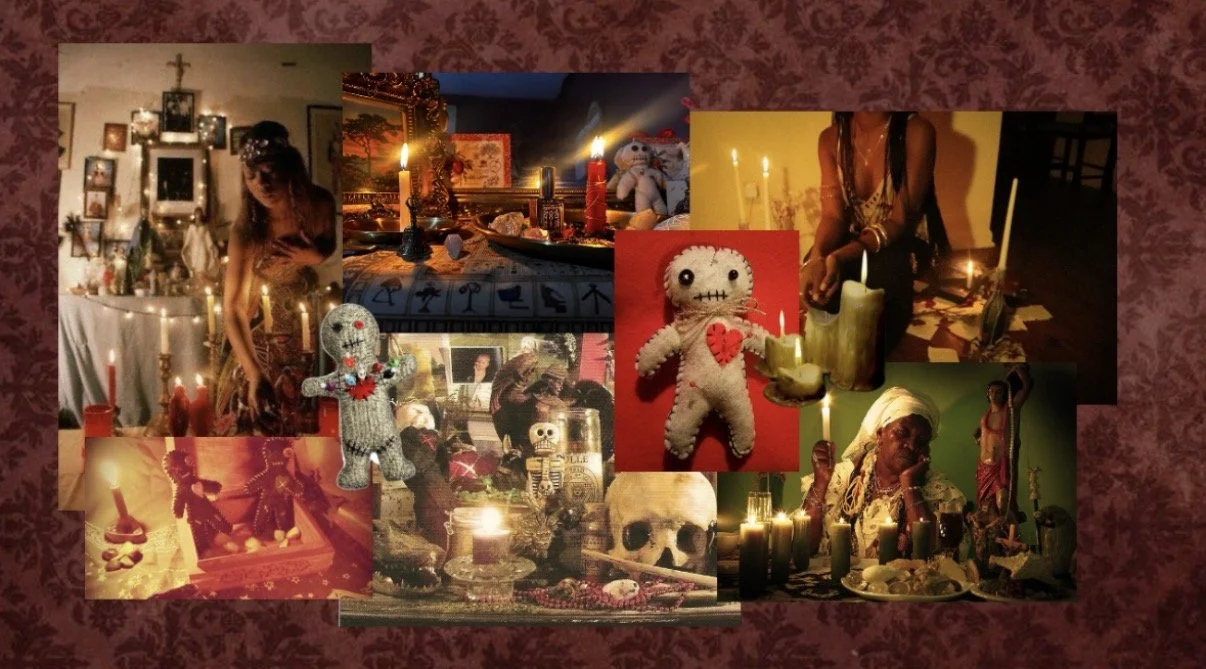
WICCA is a modern pagan religion based on the protection of the earth and animals. Unlike other religions, it has no central institution or single sacred text, and practitioners often develop their own spiritual practices with the use of candles, oils, herbs, crystals, incense, etc. Some Wiccans honour both a God and a Goddess, traditionally a Mother Goddess and a Horned God, but also Greek, Welsh, Celtic, Roman and many other cultures deities, goddesses like Artemis, Persephone, and Aphrodite, for example. They celebrate nature through 8 seasonal festivals called sabbats, such as summer (Litha) and winter solstice (Yule), with 4 festivals tied to the equinoxes and the other 4 tied to agricultural cycles. They may practise magic for healing, protection, or personal growth, with the intention that magic may not cause harm, that the process can change the practitioner as much as the situation itself. Although Wicca draws inspiration from pre-Christian traditions, it is considered a modern religion, and not all witches identify as Wiccan. All Wiccans are Pagans, but not all Pagans are Wiccans.
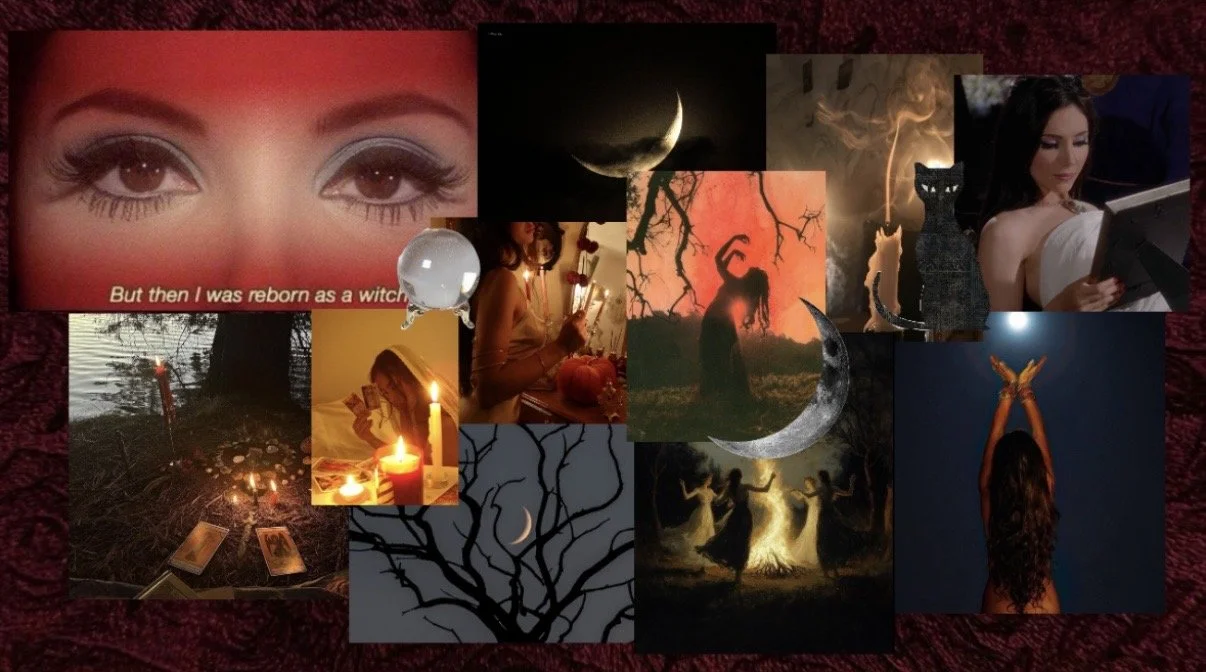
Modern-day witchcraft appears to blend the many different forms into whatever the practitioner wants it to be. It is a diverse spiritual or personal practice around nature, intention, mindfulness, and personal empowerment. Modern witchcraft rose during the 20th century revival of pagan and folk-magic traditions and drew inspiration from former European beliefs while also forming new methods of spiritual practice from past folk practices. Witchcraft is more of an independent practice nowadays, rather than an organized religion. Some common practices include rituals and intention-setting, working with herbs, crystals, and candles, and divination, through the use of tarots, runes, or pendulums. Practicioners identify depending on their approach, some will say they are Green Witches, centered around the Earth, a Sea Witch, which practices around the ocean, or even a Cosmic Witch, which focuses more on astrology, astronomy, and the celestial bodies. It has found a way to be whatever those who practice it want it to be!
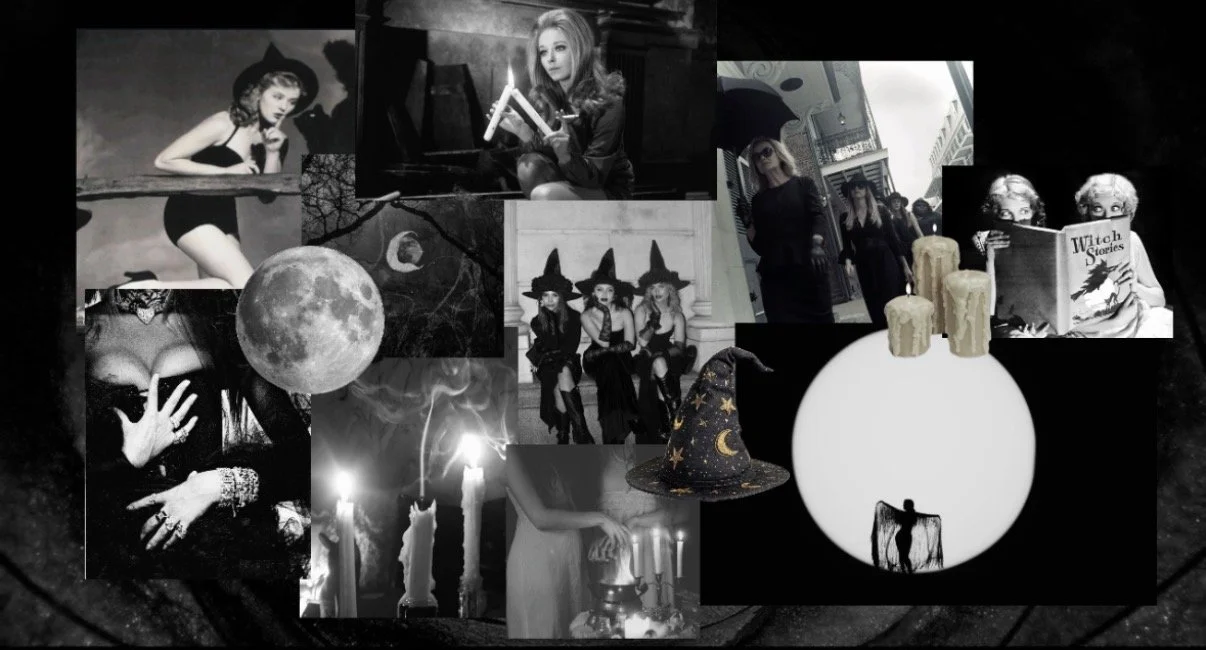
Let’s go back in time for a moment before we end off. Travelling back to the Middle Ages, thousands of people, most of them women, were accused and executed for witchcraft. And not witches in the sense of pointy-hatted with a broomstick, these were real people who were accused of using magic and witchcraft to bring harm and misfortunes to their communities, through illness, death, crop failures, and many more. Many were ordinary members of their communities, innocent people. Many of the accused were women, some of who were healers, midwives, herbalists, or folk practitioners, that possessed knowledge about plants, remedies, and childbirth. These were women who knew how to work with the Earth - using natural remedies to cure sicknesses and maladies. The women of this field were very supportive with each other, often working together and creating community, which had men become suspicious, causing them to demonize them. Not all who were accused were for such reasons, many were accused because of illness, personal disagreements with members of their communities, economic tensions, religious beliefs, and sadly some were just quick to blame for the actions of others. Many victims were previously widely respected members of their communities, who had knowledge of folk medicine, making them objects of suspicion.
The European witch hunts were fuelled by many factors, like religious beliefs, social and economic tensions, political and legal changes, and a fear of supernatural harm, everyone was on edge. During the height of the trials, many European authorities brought the idea that witches could form pacts with the Devil to harm others with supernatural powers to life, causing the whole idea to become super sinister. ‘A threat to religious and social order.’ Although many men were victims, women were mostly targeted, especially women who were poor, widowed, elderly, socially isolated, outspoken, or even outside of traditional exceptions, were often vulnerable and targeted.
It is estimated that about 110,000 witch trials occurred in Europe, between the 16th and 17th centuries, half of which resulted in executions (estimated to be approx. 50,000), due to mass hysteria, religious belief, and social conflicts. Most of these victims were were burned, hung, or endured other forms of punishment. These victims faced imprisonment, torture, execution, and the destruction of their reputations and livelihoods. There was also the Salem Witch Trials of 1692, one of the most famous examples of witchcraft persecution in North America. What began with accusations in a community quickly became a much larger crisis. More than 200 people were accused of witchcraft, and 20 people died as a result of the proceedings. Nineteen were hanged and one victim was pressed to death after refusing to enter a plea.
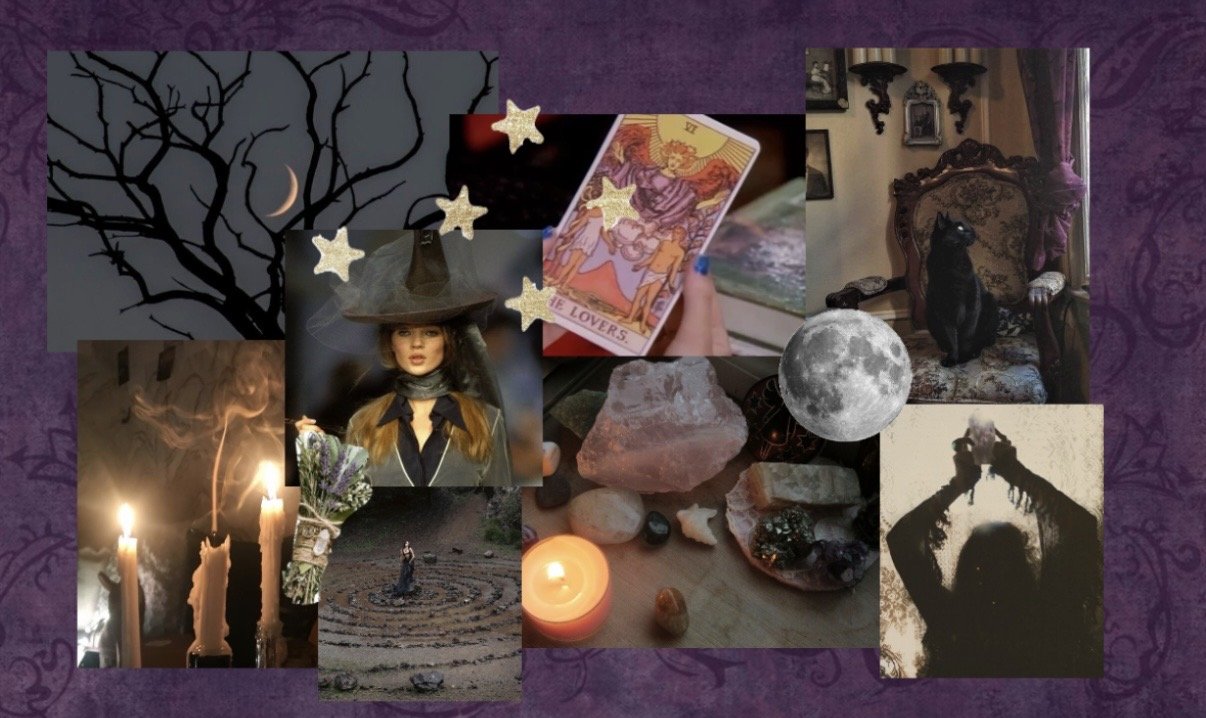
Most of these individuals who were executed were not involved in witchcraft of any sort. This raises the question in my brain of why are we taught to fear the witch and not the society who not only crafted this idea, but also executed so many innocent people due to conspiracy? Their experiences remind us how easily people who exist outside social expectations can become targets when fear takes over.
Looking back at all of this, the “witch” starts to look a little different, a lot less of double, double, toil and trouble. Perhaps the most interesting realization that I have come to know is how much a word has been shaped and spun by the people telling its story. For centuries, witches have been seen as sinister, dangerous, and evil, yet the reality is way more complicated and the truth is far from that. Behind the stereotypes made are cultural traditions, beliefs, a history of persecution and just ordinary people which reminds us how easily fear can turn into cruelty.
Maybe we don't need to believe in magic to appreciate the history behind it. Maybe we need to take the word ‘little’ to a different level. We simply need to be a little more curious about the things we don't understand, a little more willing to look beyond the stereotypes, and a little less quick to label something as evil just because it is unfamiliar. And who knows? Maybe the next time you see a pointy hat or a black cat, you'll think twice before assuming that something wicked this way comes. After all, maybe the real magic was never in the spells themselves, but in all of the stories, traditions, and the people behind them.
See you next week!
Citations for those who want to read further:
https://www.yourtango.com/2021345333/what-bruja-or-brujo-witchcraft-brujeria-meaning-explained
https://www.brandeis.edu/now/2021/september/wicca-berger-conversation.html
https://www.brandeis.edu/stories/2023/october/witchcraft.html
